![]() |
| The Rev'd Dr. Percy Dearmer |
Gathering faithful Anglicans - evangelical Christians of orthodox and catholic faith - together for witness to the River City and throughout central Kentucky.
Wednesday, February 22, 2017
Historic and True Anglicanism
Friday, June 24, 2016
The Nativity of St. John the Baptist
Today is the Nativity of St. John the Baptist |
The Church celebrates only three birthdays: our Lord’s, our Lady’s, and St. John the Baptist’s. The other saints’ days are heavenly birthdays, when the saint died or was martyred and went to Heaven. John fulfills the prophecy of Malachi, “Behold, I send my messenger before thy face, which shall prepare thy way before thee.” (Malachi 3:1) John was a steward of the mysteries of God.
Every feast has a steward. Every large airplane, every passenger ship, has stewards and stewardesses. An umpire at a baseball game is a steward of the game. John was a steward of the mysteries of God. He was a watershed figure in the Bible. He is the crown of the Old Testament prophets, the last of the Old Testament watchmen, and the first of the New Testament witnesses, witnesses to Jesus. John the Baptist was like the best man at a wedding. Jesus is the Bridegroom, the Church is the Bride, and John the Baptist is the best man. He prepares the way for the Bridegroom, by preaching repentance, and a baptism of repentance.
The Benedictus we say in every Morning Prayer is the Song of Zechariah, John the Baptist’s father. Zechariah is married to Elisabeth, Mary’s cousin. They are far too old to have children, so John’s conception is extraordinary. As soon as he names his son John, Zechariah is filled with the Holy Spirit and blesses the God of Israel. He prophesies that John will go before the face of the Lord to prepare His ways. The name John means “gift of God.” John’s gift will be the dangerous work of being the Forerunner, the one who prepares the way, the ultimate recon mission. He grows up in the desert so he can hear God’s voice and be tough as nails. He eats what is there, locusts and wild honey, and he wears animal skins. He will be a trailblazer, a pioneer and the divine herald of the coming Messiah. The mighty salvation of the world has a forerunner.
John was a man of the desert. He called the shots as God instructed him, and called the best men of the day a “brood of vipers.” John is like a surgeon clearing a clogged heart valve or a pioneer hacking a road through the wilderness or a dentist drilling out a cavity. He is like a man with an air hammer breaking through old pavement, to prepare a new road surface. The hearts of men must be broken and prepared in repentance for the coming of the Anointed One. Not surprisingly, John ends up in prison, where Herod Antipas will eventually have him beheaded. Jesus will say of John that he is even more than a prophet. John fulfills the prophesy of Malachi, “Behold, I send my messenger before thy face…”
|
The Church’s vocation, like that of John the Baptist’s, is to point to Jesus. As John prepares to baptize Jesus he says of his cousin what we say at every Mass, “Behold, the Lamb of God, which taketh away the sin of the world.” (John 1: 29) The ministers of Christ are stewards of the mysteries of God, to prepare His way before Him. We may ask today whether there is a John the Baptist of our own times. It is entirely possible that few, if any, filled this role like Alexandr Solzhenitsyn, perhaps the greatest prophetic voice of the 20th century. Solzhenitsyn, after WWII, was interred in a gulag for ten years for a slight criticism of an army officer. In the gulag, he came to repentance and conversion. He realized that the dividing line between good and evil, right and wrong, light and darkness, ran right through his own heart. He realized that the race of man, and he himself, could not redeem breakdown and disintegration. “Behold the Lamb of God, which taketh away the sin of the world.” Solzhenitsyn put his trust in the incarnate Son of God, the Lamb who is the Shepherd. He went on, as a literary genius and now a Christian, to expose the central flaw of our times, for both East and West, made clear to us in the peasant proverb, “Men have forgotten God.” In his masterpiece, August 1914: the Red Wheel, he brings us all up short with the devastating revelation that the end of the Christian West took place in August of the year 1914, in a war inspired by the demons, in which traditional, conservative, believing Christians, all related to each other in their various royal families, would have at each other for four years of mass slaughter, and rip apart the consensus of the Christian West and tear apart beyond all recognition the cultural and social fabric put in place by centuries of Christian sacrifice. Solzhenitsyn sees the two world wars as one thirty year civil war of Europe tearing itself apart. World War I gave us communist Russia, and World War II gave us Communist China, huge segments of the human race spinning off into a new gnosticism which then devolved further into the gnostic feminism which has torn apart what was left. But Solzhenitsyn ministers to us in great works like his Harvard Commencement Address, in June, 1978, offering us a way forward in a new synthesis transcending materialism, in which Christian theology engages with physics, biology, chemistry, mathematics, and the social sciences, in a new dynamic, to create a new synthesis. This great Address is our agenda as believing Christians for the entire 21st century. And today there is a revolution taking place in physics, biology and chemistry, and in the social sciences too, for those brave enough to cast aside the pathetic burned out shackles of secular humanism, gnosticism and nihilism.
There are other great prophetic figures of the previous century, too many to name here. But we could cite, in the same breath as Solzhenitsyn, a contemporary of great stature. Archbishop Arthur Michael Ramsey writes that “It was in reaction from liberal theology that Karl Barth and his school uttered afresh the message of God’s otherness and sovereignty and His mighty act in the Resurrection, as the war of 1914-1918 was drawing to its close. The Resurrection was the central message of Barth; and he recalled Christians who minds were full of man’s religion, man’s experiences and man’s progress, to the Act of the living God which confronts a race helpless to save itself. Jesus Christ is Lord. This is the Gospel and the meaning of history…(Barth) stirred Christians in every land and tradition to face once more the transcendental and catastrophic themes of the New Testament.” (The Resurrection of Christ, p. 119)
Let us today thank God for St. John the Baptist and to those multitudes who, like Solzhenitsyn and Barth, follow in his footsteps as stewards of the mysteries of God, to prepare the way of the Lord, so that the “day-spring from on high” may visit us, and appear in our minds, our hearts and our service to one another.
“Almighty God, by whose providence thy servant John Baptist was wonderfully born, and sent to prepare the way of thy Son our Saviour by preaching repentance; Make us so to follow his doctrine and holy life, that we may truly repent according to his preaching; and after his example constantly speak the truth, boldly rebuke vice, and patiently suffer for the truth’s sake, through the same thy Son Jesus Christ our Lord. Amen.” (BCP p. 242)
|
Tuesday, September 24, 2013
Michaelmas is here!
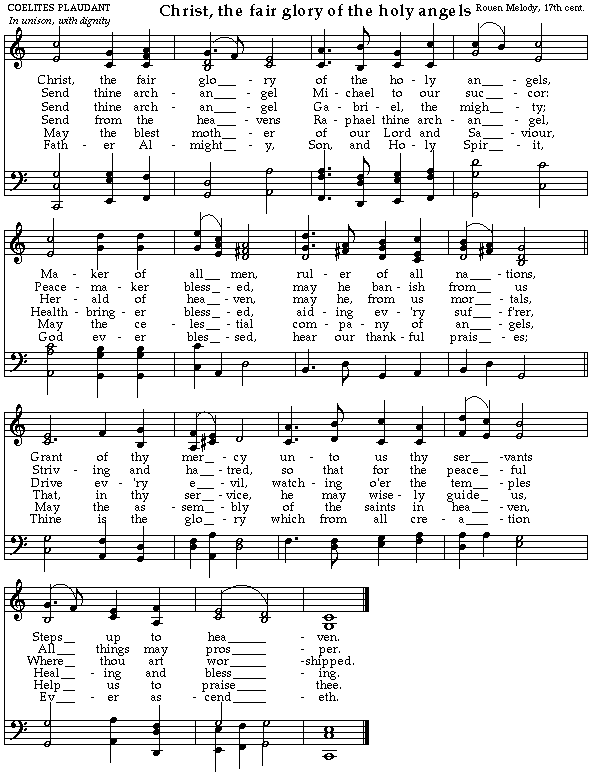
| Coelites Plaudant - 5 verses, C | ||
| |
||
| Found at bee mp3 search engine |
Friday, September 14, 2012
Feast of the Holy Cross
| Lift High the Cross | ||
| | ||
| Found at bee mp3 search engine |
Readings for the Feast of the Holy Cross are found here.
Christ, have mercy.
Lord, have mercy.
Christ, hear us.
Christ, graciously hear us.
have mercy on us.
God the Son, Redeemer of the world,
have mercy on us.
God, the Holy Spirit,
have mercy on us.
Holy Trinity, One God,
have mercy on us.
The word of the Cross is folly to those who are perishing,
but to us who are being saved it is the power of God.
God forbid that I should glory save in the Cross of our Lord Jesus Christ,
by which the world has been crucified to me, and I to the world.
God forbid that I should glory save in the Cross of our Lord Jesus Christ,
by which the world has been crucified to me, and I to the world.
God forbid that I should glory save in the Cross of our Lord Jesus Christ,
by which the world has been crucified to me, and I to the world.
God forbid that I should glory save in the Cross of our Lord Jesus Christ,
by which the world has been crucified to me, and I to the world.
God forbid that I should glory save in the Cross of our Lord Jesus Christ,
by which the world has been crucified to me, and I to the world.
Reflection: The Cross always stands ready, and everywhere awaits you. You cannot escape it, wherever you flee; for wherever you go,you bear yourself, and always find yourself. Look up or down, without you or within, and everywhere you will find the Cross. And everywhere you must have patience, if you wish to attain inner peace, and win an eternal crown.
God forbid that I should glory save in the Cross of our Lord Jesus Christ,
by which the world has been crucified to me, and I to the world.
spare us, O Lord!.
Lamb of God, Who take away the sins of the world,
graciously hear us, O Lord!
Lamb of God, Who take away the sins of the world,
have mercy on us.
If you haven't taught your children to remember their salvation using the sign of the cross (a duty Martin Luther put especially on fathers), why not today? For further reflection, I recommend ECatBedside's reflection piece.
Tuesday, February 21, 2012
Gingerbread Pancakes for Shrove Tuesday
GINGERBREAD PANCAKES
(inspired by Kerbey Lane in Austin, but it’s been so long since I’ve eaten there, I can’t verify the authenticity)
Cream together:
6 eggs
2/3 cup brown sugar
Add, then mix well:
1 cup buttermilk*
3/4 cup water
1/2 cup coffee (brewed)
2 tsp vanilla
In a seperate bowl, combine dry ingredients:
5 cups all-purpose flour
1 tsp baking powder
2 tsp baking soda
1/4 Tbs. cloves
2 Tbs. cinnamon
2 Tbs. ginger
1.5 Tbs. nutmeg
Add dry ingredients to wet, mixing gently. When combined, mix in:
1 stick of butter, melted
This makes about 7-8 thick, plate sized pancakes. SUPER thick. Cut back a tsp of baking soda or so if you prefer less cake-y pancakes.
* buttermilk is easy to make: 1 c. milk + 1 Tbs. lemon juice or vinegar, I let it stand for a half hour or so, but you could probably push it to even 5 or 10 minutes in a pinch.
Friday, March 11, 2011
Installation at Holy Apostles in Elizabethtown
Installation of Fr. Chris Larimer from Fr. Chris Larimer on Vimeo.
This is my installation as rector of Holy Apostles Anglican Church in Elizabethtown, KY. The officiant was the Right Reverend John A. M. Guernsey, Bishop of the Diocese of the Holy Spirit (Anglican Church in North America).
Unfortunately, we ran out of memory just after the Gospel, so you missed out on his sermon. But you don't have to miss out on anything else! Worship with us at 10AM on the Public Square.
Learn more at our website.
Friday, January 28, 2011
Installation at Holy Apostles in Elizabethtown
10:00am – 11:30am
Holy Apostles Anglican Church
56 Public Square
Elizabethtown, KY
The Rt. Rev’d. John A. M. Guernsey, bishop of the Diocese of the Holy Spirit, will preach, celebrate the Eucharist, and install the Rev’d. Chris Larimer as rector of Holy Apostles Anglican Church. The service will begin at 10 AM. Holy Communion is available to all baptized Christians. Afterward, light refreshments will be served and there will be a meet-and-greet with the bishop.
Childcare will be available. Children are welcome in the service. Parking is available around the square and behind the church in Strawberry Alley.
For details, contact the church (270-769-1170) or the rector (frchris@holyapostlesky.org).
Visiting clergy are welcome to process (red stoles, please).
There's also an interview at the Western Kentucky Anglican's blog!
PS - I have it on good authority that Art Going, an AMiA church planter beginning work in Louisville, will be there. Come meet him, too!
Saturday, December 25, 2010
Friday, December 17, 2010
War on Christmas?
Don't forget to check for updates on Anglican Christmas services in the greater central KY area.
Tuesday, December 14, 2010
Christmas is Coming
Christmas Eve
5:30 p.m., Family Service
8:00 p.m., Choral Prelude
8:30 p.m. Traditional Service
Christmas Day - no services
St. Luke's (Maysville, KY)
Christmas Eve 3:00p.m. on 12/24.
Christmas Day - no services
Monday, December 6, 2010
Happy St. Nicholas Day!
Nicholas was a native of the western part of what is now Asiatic Turkey. He became Bishop of Myra in the fourth century, and there are many stories of his love for God and for his neighbor.
Because of this and similar stories, Nicholas became a symbol of anonymous gift-giving. Hence, if we give a gift to someone today without saying whom it is from, it can be called "a present from Saint Nicholas (or Santa Claus)." Some parents explain this to their children and invite the child to join them in wrapping a toy (either something purchased for that purpose, at least partly with the child's allowance, or else a toy that the child has outgrown but that is still serviceable) or an outgrown but not shabby item of the child's clothing, or a package of food, and then going along to donate it to a suitable shelter that will give it to someone who will welcome it. This gift is then called "a present from Santa," so that the child understands that this is another name for an anonymous gift given to someone whom we do not know, but whom we love anyway because God does. (Presents within the family can be "From Santa" or "From Santa and...")
Pictures of Nicholas often show three bags of gold next to him, and often these bags have become simply three disks or balls. Nicholas became the patron of an Italian city (I think Bari, which is where his body is now buried) that was a center of the pawnbroking business, and hence a pawnbroking shop traditionally advertises by displaying three gold balls over its front. It is thought that some persons looking at pictures of Nicholas confused the three round objects with human heads.
In many countries, Nicholas visits children on his feast day, 6 December, and brings them gifts then. In these countries, there is usually no exchange of Christmas presents, but there may be gifts again on January 6, the feast of the coming of the Wise Men, who brought gifts to the Holy Child of gold, frankincense, and myrrh. In America, it may be thought necessary to yield to outside pressure and let Nicholas distribute gifts on December 25.
If you want to show your children (or yourself) how Nicholas is remembered by Christians with a background different from your own (unless, of course, this IS your background), you might want to attend an East Orthodox service at this time. Many Eastern Orthodox congregations have services on the evening before 6 December that feature "visits from Saint Nicholas." He appears as a bishop, with no red suit. The faithful leave their shoes outside the church door, and find in them afterwards gold coins (actually chocolate wrapped in gold foil) representing the gold dowries of the three daughters. To find a service and inquire what it is likely to be like, look up CHURCHES, ORTHODOX in the Yellow Pages. For an English-language service, "Orthodox Church in America" or "Antiochan Orthodox" parishes are likely choices, but do not overlook other possibilities. There are also wonderful ideas for celebrating this day, especially with children, at the St. Nicholas Center.
We are told, but it is uncertain, that Nicholas was imprisoned for his faith before the accession of Constantine, and that he was present at the Council of Nicea in 325. We may note in passing that the picture of him as roly-poly is a late development. Early stories indicate that he was generous to others, but not given to self-indulgence. Indeed, even as an unweaned infant, he fasted regularly on Wednesdays and Fridays.
by James Kiefer
Readings:
Preface of a Saint (1)
PRAYER (traditional language)
Almighty God, who in thy love didst give to thy servant Nicholas of Myra a perpetual name for deeds of kindness on land and sea: Grant, we pray thee, that thy Church may never cease to work for the happiness of children, the safety of sailors, the relief of the poor, and the help of those tossed by tempests of doubt or grief; through Jesus Christ our Lord, who liveth and reigneth with thee and the Holy Spirit, one God, for ever and ever.
PRAYER (contemporary language)
Almighty God, who in your love gave to your servant Nicholas of Myra a perpetual name for deeds of kindness on land and sea: Grant, we pray, that your Church may never cease to work for the happiness of children, the safety of sailors, the relief of the poor, and the help of those tossed by tempests of doubt or grief; through Jesus Christ our Lord, who lives and reigns with you and the Holy Spirit, one God, for ever and ever.
Tuesday, November 30, 2010
Happy St. Andrews Day!
Readings:
Psalm 19 or 19:1-6
Deuteronomy 30:11-14
Romans 10:8b-18
Matthew 4:18-22Preface of Apostles
Collect: Almighty God, who gave such grace to your apostle Andrew that he readily obeyed the call of your Son Jesus Christ, and brought his brother with him: Give unto us, who are called by your Word, grace to follow him without delay, and to bring those near to us into his gracious presence; who lives and reigns with you and the Holy Spirit, one God, now and for ever.
Most references to Andrew in the New Testament simply include him on a list of the Twelve Apostles, or group him with his brother, Simon Peter. But he appears acting as an individual three times in the Gospel of John. When a number of Greeks (perhaps simply Greek-speaking Jews) wish to speak with Jesus, they approach Philip, who tells Andrew, and the two of them tell Jesus (Jn 12:20-22). (It may be relevant here that both "Philip" and "Andrew" are Greek names.) Before Jesus feeds the Five Thousand, it is Andrew who says, "Here is a lad with five barley loaves and two fish." (Jn 6:8f) And the first two disciples whom John reports as attaching themselves to Jesus (Jn 1:35-42) are Andrew and another disciple (whom John does not name, but who is commonly supposed to be John himself -- John never mentions himself by name, a widespread literary convention). Having met Jesus, Andrew then finds his brother Simon and brings him to Jesus. Thus, on each occasion when he is mentioned as an individual, it is because he is instrumental in bringing others to meet the Saviour. In the Episcopal Church, the Fellowship of Saint Andrew is devoted to encouraging personal evangelism, and the bringing of one's friends and colleagues to a knowledge of the Gospel of Christ.
Just as Andrew was the first of the Apostles, so his feast is taken in the West to be the beginning of the Church Year. (Eastern Christians begin their Church Year on 1 September.) The First Sunday of Advent is defined to be the Sunday on or nearest his feast (although it could equivalently be defined as the fourth Sunday before Christmas Day).
Several centuries after the death of Andrew, some of his relics were brought by a missionary named Rule to Scotland, to a place then known as Fife, but now known as St. Andrew's, and best known as the site of a world-famous golf course and club. For this reason, Andrew is the patron of Scotland.
When the Emperor Constantine established the city of Byzantium, or Constantinople, as the new capital of the Roman Empire, replacing Rome, the bishop of Byzantium became very prominent. Five sees (bishoprics) came to be known as patriarchates: Rome, Alexandria, Antioch, Jerusalem, and Byzantium. Now, the congregation at Rome claimed the two most famous apostles, Peter and Paul, as founders. Antioch could also claim both Peter and Paul, on the explicit testimony of Scripture, and of course Jerusalem had all the apostles. Alexandria claimed that Mark, who had been Peter's "interpreter" and assistant, and had written down the Gospel of Mark on the basis of what he had heard from Peter, had after Peter's death gone to Alexandria and founded the church there. Byzantium was scorned by the other patriarchates as a new-comer, a church with the political prestige of being located at the capital of the Empire, but with no apostles in its history. Byzantium responded with the claim that its founder and first bishop had been Andrew the brother of Peter. They pointed out that Andrew had been the first of all the apostles to follow Jesus (John 1:40-41), and that he had brought his brother to Jesus. Andrew was thus, in the words of John Chrysostom, "the Peter before Peter." As Russia was Christianized by missionaries from Byzantium, Andrew became the patron not only of Byzantium but also of Russia.
Andrew is the national saint of Scotland (thus appreciated, even by Presbyterians! - Ed.). George (23 Apr) is the national saint of England, Patrick (17 Mar) of Ireland, and Dewi = David (1 Mar) of Wales. George, who was a soldier, is customarily pictured as a knight with a shield that bears a red cross on a white background. This design is therefore the national flag of England. It is said that Andrew was crucified on a Cross Saltire -- an 'X' -shaped cross. His symbol is a Cross Saltire, white on a blue background. This is accordingly the national flag of Scotland. A symbol of Patrick is a red cross saltire on a white background. The crosses of George and Andrew were combined to form the Union Jack, or flag of Great Britain, and later the cross of Patrick was added to form the present Union Jack. Wales does not appear as such (sorry!). Whether there is a design known as the cross of David, I have no idea.
by James Kiefer
Friday, November 5, 2010
Getting a Handel on things
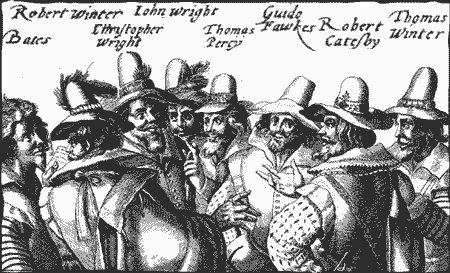
Happy Bonfire Day!
Happy Guy Fawkes Day, everybody!
-
- Remember, remember the Fifth of November,
- The Gunpowder Treason and Plot,
- I know of no reason
- Why the Gunpowder Treason
- Should ever be forgot.
- Guy Fawkes, Guy Fawkes, t'was his intent
- To blow up the King and Parli'ment.
- Three-score barrels of powder below
- To prove old England's overthrow;
- By God's providence he was catch'd
- With a dark lantern and burning match.
- Holla boys, Holla boys, let the bells ring.
- Holla boys, Holla boys, God save the King! (Queen)
Here's to 492 years of the Gospel recovered, and 404 years of the Gospel in England providentially defended!
Friday, October 29, 2010
Tuesday, October 26, 2010
Alfred the Great, King of the West Saxons
In the 800's the cycle partly repeated itself, as the Christian Anglo-Saxons were invaded by the Danes, pagan raiders, who rapidly conquered the northeast portion of England. They seemed about to conquer the entire country and eliminate all resistance when they were turned back by Alfred, King of the West Saxons.
Alfred was born in 849 at Wantage, Berkshire, youngest of five sons of King Aethelwulf. He wished to become a monk, but after the deaths (all in battle, I think) of his father and his four older brothers, he was made king in 871. He proved to be skilled at military tactics, and devised a defensive formation which the Danish charge was unable to break. After a decisive victory at Edington in 878, he reached an agreement with the Danish leader Guthrum, by which the Danes would retain a portion of northeastern England and be given other concessions in return for their agreement to accept baptism and Christian instruction.
In his later years, having secured a large degree of military security for his people, Alfred devoted his energies to repairing the damage that war had done to the cultural life of his people. He translated Boethius' Consolations of Philosophy into Old English, and brought in scholars from Wales and the Continent with whose help various writings of Bede, Augustine of Canterbury, and Gregory the Great were likewise translated. He was much impressed by the provisions in the Law of Moses for the protection of the rights of ordinary citizens, and gave order that similar provisions should be made part of English law. He promoted the education of the parish clergy. In one of his treatises, he wrote:
"He seems to me a very foolish man, and very wretched, who will not increase hisHe died on 26 October 899, and was buried in the Old Minster at Winchester. Alone among English monarchs, he is known as "the Great."
understanding while he is in the world, and ever wish and long to reach that
endless life where all shall be made clear."
The writer G K Chesterton has written a long narrative poem about Alfred, called, "The Ballad of the White Horse." In my view, it would be improved by abridgement (I would, for example, terminate the prologue after the line "And laid peace on the sea"), but I think it well worth reading as it stands, both for the history and (with minor reservations) for the theology.
Collect and propers here.
A Prayer for Central KY Anglicans
O MOST powerful and glorious Lord God, at whose command the winds blow, and lift up the waves of the sea, and who stillest the rage thereof. We thy creatures, but miserable sinners, do in this our great distress cry unto thee for help: Save, Lord, or else we perish. We confess, when we have been safe, and seen all things quiet about us, we have forgot thee our God, and refused to hearken to the still voice of thy word, and to obey thy commandments: But now we see, how terrible thou art in all thy works of wonder; the great God to be feared above all: And therefore we adore thy Divine Majesty, acknowledging thy power, and imploring thy goodness. Help, Lord, and save us for thy mercy's sake in Jesus Christ thy Son, our Lord. Amen.
Book of Common Prayer, 1662
Prayers to be used at Sea
Thursday, October 21, 2010
Letter from Archbishop Duncan
TO ALL THE MEMBERS AND FRIENDS OF
THE ANGLICAN CHURCH IN NORTH AMERICA:
Dear Brothers and Sisters in Christ,
The Constitution and Canons of the Anglican Church in North America boldly proclaim that "the people of God are the chief agents of the mission of the Church" and that "the fundamental agency of mission in the Province is the local congregation." Ours is a church whose focus is on converted individuals in multiplying congregations. Ours is a church also built on the tithes of the faithful: the household to the local congregation, the local congregation to the diocese, the diocese to the Province.
God led us to build our Province on committed disciples, the local congregations and the tithe: all for the purpose of reaching North America with the transforming love of Jesus Christ. The Holy Scriptures caused us to do things this way. We had (and have) a special stake in basing the whole of our life on the direction Scripture gives. While it is only one aspect of discipleship, imagine what God could do through us if all of us tithed! No congregation would any longer be "short," no diocese would lack for funds for new works, and the Province would rightly live within the tithes sent to it. We need to start challenging one another about this at the local level. God promises (Malachi 3: 8-10) to open the windows of heaven if we cease to "rob Him" and give Him our "full tithes."
If you are not already doing so, this would be a great year to take the leap. The tithe to your local congregation is the beginning point. If not yet tithing, even to move a percentage point a year over the next several years will make an amazing difference, both to the Church at every level, and most significantly to your own personal relationship with God.
Our Church, like Scripture itself, also teaches that the tithe is the beginning of our giving. Many of us give more than a tithe - Nara and I do so. It is all about thanksgiving to the Lord for what He has done. Some give to a point of sacrifice. They are among my heroes. Jesus and the apostolic Church most often teach either 50/50 or 100 per cent giving. Most of us who heard our friend Dr. Rick Warren of Saddleback Church speak to us at our Inaugural Assembly cannot forget the witness he and his wife make in giving away 90 percent of their income and just keeping 10 per cent. He is actually not alone in this practice that only a few can undertake, but most of us can stretch farther than we do. Pray and ask the Savior what He wants of you.
Our Provincial budget is based on the tithe of our dioceses, just as diocesan budgets are based on the tithes of their congregations. When all our local congregations get to right order, and all our dioceses get there too, we are convinced that the Province will well be able to live within these tithes for our annual operations. We have a distance to go before all our members are Biblical tithers. So at present we have a gap. For several years we know that we will have to ask some of our people and some of our congregations to "go the extra mile" beyond their tithe to help meet Provincial needs. This is not the long-term picture.
The very good news is that we are almost half of the way to where we need to be to fund the base-line Provincial work. That is quite an accomplishment given the fact that the Province was only birthed 16 months ago! For now I need to ask for "extra-mile" giving to fill the gap.
At the August Executive Committee meeting an "Extra Mile Fund" was established to stand alongside "the Founders' Fund." Gifts to each - beyond your tithe to your own parish - will make it possible for our Province to be well launched in these "gap" years in which I will be serving you as first archbishop. Parishes that are able are also asked to consider gifts - beyond their diocesan tithe - to the Extra Mile or Founders' Funds.
Individuals and parishes are asked to consider a direct gift to the Province this year, and perhaps during several of the next years. We do not yet have all our households and congregations tithing, but as discipleship improves the need will diminish. This is the Archbishop's gap appeal. Individual and parish gifts directed for the ACNA of up to $10,000 will be credited to the Extra-Mile Fund. Gifts over $10,000 will be credited to the Founders' Fund. We need some $480,000 for this year's operation on top of the $900,000 already committed by dioceses, parishes and individuals. Please remember that the Province is providing both direct and subsidiary support to 20 Dioceses and more than 640 congregations in North America.
Help me, please, in these "gap" years to be your archbishop and do what the Provincial Council believes is essential. We started a year ago as a Province and have come a very great distance. For the long-haul, tithe and teach the tithe and the windows of heaven will be open for your parish, your diocese and our province, as well.
God bless you each and every one.
Faithfully in Christ,
Archbishop and Primate
[1] Canon I. 10, Section 1
[1] Constitution Article IV, point 1.
[1] Canon I. 9, Section 1 and Canon I. 10, Section 2, point 5.
[1] Typical are Lk 3:11; Lk 12:33-34; Acts 2:44-45; Acts 5:40-42; Lk 9:23-24.
P.S.
If you wish to be part of the Extra Mile Fund there are two ways to make a contribution:
You can send a check payable to:
Anglican Church in North America
800 Maplewood Ave.
P.O. Box 447
Ambridge, PA 15003
Please note in Memo section: "Extra Mile Fund"
Or contribute online at : http://anglicanchurch.net/?/main/donate
Wednesday, October 13, 2010
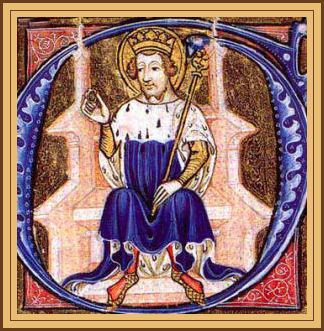
Translation of Edward the Confessor
Æthelred was followed by several Danish kings of England, during whose rule young Edward and his mother took refuge in Normandy. But the last Danish king named Edward as his successor, and he was crowned in 1042. Opinions on his success as a king vary. Some historians consider him weak and indecisive, and say that his reign paved the way for the Norman Conquest. Others say that his prudent management gave England more than twenty years of peace and prosperity, with freedom from foreign domination, at a time when powerful neighbors might well have dominated a less adroit ruler. He was diligent in public and private worship, generous to the poor, and accessible to subjects who sought redress of grievances.
While in exile, he had vowed to make a pilgrimage to Rome if his family fortunes mended. However, his council told him that it was not expedient for him to be so long out of the country. Accordingly, he spent his pilgrimage money instead on the relief of the poor and the building of the Collegiate Church of St Peter at Westminster, better known as Westminster Abbey, which stands today (rebuilt in the thirteenth century) as one of the great churches of England, burial place of her kings and others deemed worthy of special honor. He is buried there as well.
He died on 5 January 1066, leaving no offspring; and after his death, the throne was claimed by his wife's brother, Harold the Saxon, and by William, Duke of Normandy. William defeated and slew Harold at the Battle of Hastings (14 October 1066), and thereafter the kings and upper classes of England were Norman-French rather than Anglo-Saxon. Edward is remembered, not on the day of his death, but on the anniversary of the moving ("translation") of his corpse to a new tomb, a date which is also the anniversary of the eve of the Battle of Hastings, the end of Saxon England.
| Clyde McLennan - Round the Lord in glory seated .mp3 | ||
| | ||
| Found at bee mp3 search engine |
O God, who called your servant Edward to an an earthly throne That he might advance your heavenly kingdom, and gave him zeal for your Church and love for your people: Mercifully grant that we who commemorate him this day may be fruitful in good works, and attain to the glorious crown of your saints; through Jesus Christ our Lord, who lives and reigns with you and the Holy Spirit, one God, for ever and ever.
Sunday, October 10, 2010
Ruth: Providence in Your Darkest Days
Proper23C Ruth - Providence in the Darkest of Days from Fr. Chris Larimer.
A sermon preached at Holy Apostles in Elizabethtown, KY. The text is Ruth 1. It focuses on how God's good providence is seen in the ordinary actions of ordinary people in the darkest days of history - in order to bring the Light of the World. The sermon is 26 minutes long